

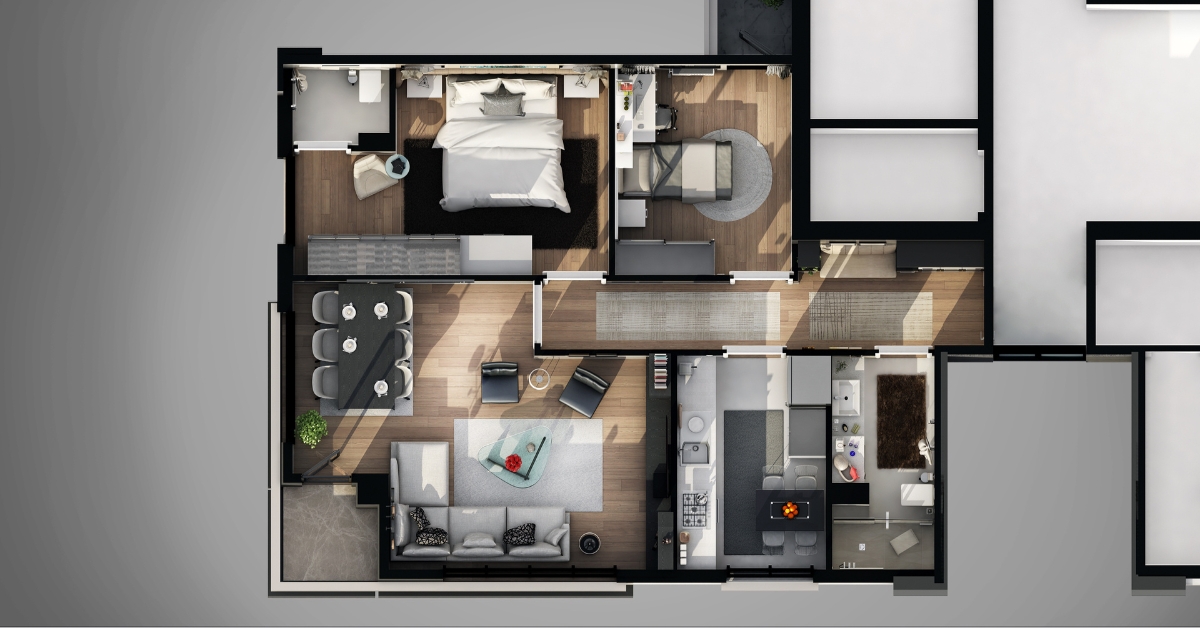
The decision to build a new home is one of the biggest investments a person will ever make, and for many, the process of selecting and customizing a design is where confusion and anxiety take root.
Historically, the selection process involved poring over flat, two-dimensional blueprints, flipping through binders of material samples, and trying to mentally calculate how a tiny change might affect the final cost or space. This static, abstract approach often led to costly change orders and, worse, post-build regret.
Today, this outdated system is being replaced by a sophisticated digital tool with an interactive house plan. These plans are dynamic, three-dimensional digital models that put the power of customization and visualization directly into the hands of the homebuyer.
This technological leap is particularly powerful within the modular home industry, where the efficiency of factory-built components meets the flexibility of custom design. By offering real-time modification, instant cost estimation, and immersive visualization, interactive house plans are transforming the home selection process into a confident, transparent, and highly personalized experience.
The Power of Real-Time Customization
The core value of interactive house plans lies in their ability to bridge the gap between imagination and reality. They transform a passive viewing experience into an active design session.
Visualizing Space and Flow
For most homebuyers, translating lines on a paper floor plan into actual three-dimensional space is difficult. Will that kitchen island feel too cramped? Is the living room large enough for the family sofa? Interactive house plans solve this by allowing users to virtually step inside the digital model.
This often involves 3D modeling and Virtual Reality (VR) or Augmented Reality (AR) tools. Users can “walk through” the home, gaining an accurate sense of scale, ceiling height, and the relationship between adjacent rooms.
They can test the flow of the home, such as how easy it is to move from the garage to the kitchen, or how the master bedroom connects to the laundry room, which is critical to daily livability. This immersive approach confirms that the home’s design is not just aesthetically pleasing, but functionally correct for their lifestyle.
Instant Design Modification
A major advantage of modular construction is its inherent flexibility, despite the homes being “pre-engineered.” Interactive house plans capitalize on this by providing instant modification capabilities. Buyers can select a base model from a catalog and immediately begin tweaking the design.
Users can move non-load-bearing interior walls, converting a spare bedroom into a large den, or merging a dining room and kitchen to create an open-concept space. The impact of the change is reflected instantly in the floor plan and the 3D view.
Buyers can test various window sizes and positions to maximize natural light and views, a crucial factor often overlooked in the early design phase. Everything from cabinet styles and appliance packages to flooring materials and paint colors can be selected and applied in the digital model.
This ensures the aesthetic vision aligns perfectly with the final product, eliminating those stressful, last-minute decisions based on small material swatches. By allowing buyers to experiment freely without penalty, interactive house plans prevent the “what if” factor that often leads to hesitation or costly changes once construction has already begun.
Transparent Pricing and Budget Control
One of the greatest anxieties in custom home building is the unpredictable nature of the budget. Changes to a design often result in delayed, opaque pricing adjustments that leave the buyer feeling out of control. Interactive plans introduce complete financial transparency.
Dynamic Cost Modeling
Interactive platforms are integrated with a dynamic pricing engine tied to the modular manufacturer’s supply chain. As a buyer makes a selection, say, upgrading from laminate countertops to a premium quartz, the total project cost is updated automatically and instantly. This direct, real-time link between design and budget is transformative.
It allows buyers to instantly compare the value of different features. For example, they can see exactly how much money is saved by choosing a standard tile package versus a luxury one, allowing them to reallocate those savings to a priority area, such as a high-end HVAC system or larger deck.
By seeing the immediate financial impact of every choice, buyers are better equipped to stay within their target budget. They can design right up to their price ceiling without the risk of accidentally overspending, a common pitfall in traditional building.
Standard features and custom upgrades are clearly delineated, ensuring the buyer understands exactly what is included in the base price and what constitutes an added cost. This level of financial clarity builds trust and confidence, transforming the negotiation process into a collaborative optimization of value.
Streamlining the Modular Selection Process
The modular construction industry relies on efficiency and standardization, but this doesn’t mean sacrificing choice. Interactive house plans help homebuyers navigate the extensive catalogs of pre-engineered options efficiently.
Intelligent Filtering and Comparison
Modular manufacturers typically offer a wide array of base models. Interactive platforms help buyers zero in on the best fit quickly. Users can filter available models based on essential criteria relevant to their needs and lot specifications: total square footage, required number of bedrooms, specific rooflines, or even required foundation types.
The best platforms facilitate the comparison of several top-contender models simultaneously. This allows buyers to view key statistics, including dimensions, total cost, customizable features, and even estimated long-term energy performance scores, in a single view, clarifying subtle differences that might be missed in separate documents.
By providing a structured, data-rich way to compare options, interactive plans empower the buyer to act as their own project analyst, making a complicated set of choices logical and manageable.
Optimizing for Performance and Efficiency
Modular homes are often engineered for superior energy efficiency due to factory-controlled insulation and construction precision. The interactive house plan incorporates this information.
As a buyer selects window types, insulation packages, and HVAC systems, the interactive model can display the impact on the home’s projected energy use or a Home Energy Rating System (HERS) score. This links customization to long-term operational savings, allowing buyers to consciously invest in efficiency.
Design Your Certainty With Immersive Homes
Interactive house plans are the essential tool for confident modular home selection, replacing guesswork with dynamic, real-time visualization and transparent cost modeling. This technology allows you to virtually customize your floor plan, choose finishes, and compare options instantly, all while seeing the live impact on your budget.
Immersive Homes integrates this seamless, VR-enabled design experience with the quality and efficiency of factory-built construction. Start customizing your perfect, cost-certain home with Immersive Homes today!