

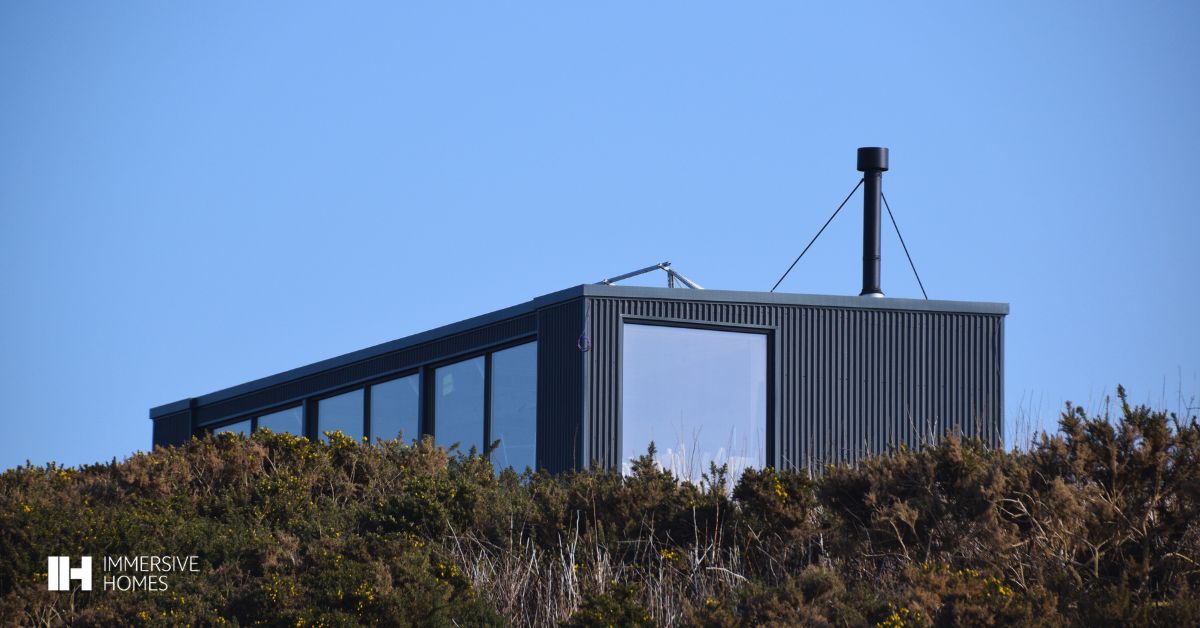
As more people look beyond traditional housing systems, off grid prefab homes are gaining traction for their ability to deliver predictable performance in places where weather, isolation, and infrastructure limitations create serious challenges. From freezing mountain regions to arid desert landscapes, these homes are built to adapt, endure, and perform.
What Are Off Grid Prefab Homes?
Off grid prefab homes are residential structures designed to operate independently from public utilities such as electricity, water supply, and sewage systems. Unlike conventional homes, these properties integrate self-sustaining systems directly into their design.
Prefab construction plays a key role in this process. Instead of building everything on site, most components are manufactured in a controlled environment, then transported and assembled on location. This approach ensures tighter quality control and better system integration.
To function effectively, off grid prefab homes typically include:
• Renewable energy systems such as solar panels or wind turbines
• Battery storage for continuous power
• Water collection and filtration systems
• Independent waste management solutions
• High-performance insulation and airtight construction
A common misconception is that installing solar panels alone makes a home off grid. In reality, true independence requires a fully integrated system where energy, water, and waste solutions work together seamlessly.
Why Harsh Climates Demand Smarter Design
Harsh climates expose weaknesses quickly. Whether it is freezing temperatures, high winds, or extreme heat, every design decision impacts performance.
Off grid prefab homes must be engineered with these environmental pressures in mind from the very beginning.
Key challenges include:
• Temperature extremes that strain heating and cooling systems
• Limited sunlight in winter, affecting solar energy production
• Strong winds that test structural integrity
• Heavy snow loads that stress roofs and framing
• Remote access that complicates traditional construction logistics
For example, a home in a northern climate may experience weeks of cloud cover and subzero temperatures. Without proper insulation, energy storage, and structural design, maintaining indoor comfort becomes difficult and expensive.
Prefab construction helps address these issues by allowing precise engineering before the home ever reaches the site.
Engineering Strength Into Off Grid Prefab Homes
One of the biggest advantages of off grid prefab homes is their structural reliability. These homes are often stronger than traditional builds because they must withstand transportation and crane installation.
Key engineering features include:
• Steel or engineered timber frames for durability
• Reinforced joints and cross-bracing for stability
• Impact-resistant exterior materials
• Anchoring systems designed for wind and seismic activity
Steel-frame construction, in particular, aligns with Immersive Homes’ approach. It offers superior strength, resistance to pests and moisture, and long-term dimensional stability.
This level of engineering ensures that the home can handle environmental stress without compromising safety or comfort.
Foundation Systems for Stability
The foundation is critical in any home, but even more so in off grid prefab homes located in extreme environments.
Different climates require different solutions:
• Pier foundations work well on uneven or rocky terrain
• Frost-protected shallow foundations prevent freezing damage in cold regions
• Slab-on-grade foundations are ideal for warm, dry climates
Choosing the right foundation helps prevent moisture intrusion, structural shifting, and energy loss. It also ensures that the home remains stable over time despite changing environmental conditions.
Energy Systems That Power Independence
Energy independence is at the core of off grid prefab homes. These homes rely on renewable sources combined with smart storage solutions.
1. Solar Power
Solar energy is the most common choice. In harsh climates, systems are adapted to maximize efficiency:
• Steeper panel angles help shed snow
• Larger arrays compensate for reduced sunlight
• Strategic orientation improves daily energy capture
2. Wind Energy
In areas with consistent wind, turbines can supplement solar power. This is particularly useful in coastal or mountainous regions where wind patterns are strong.
3. Battery Storage
Energy storage ensures reliability. Lithium iron phosphate batteries are widely used due to their safety and performance in extreme temperatures.
4. Backup Systems
Even the best systems need backup. Generators powered by propane or biofuel provide additional security during extended periods of low energy production.
For example, a home in a snowy region may rely on solar energy during clear days, wind energy during storms, and battery storage overnight, with a generator as a final backup.
Heating and Cooling Strategies
Maintaining indoor comfort in off grid prefab homes requires efficient heating and cooling systems.
1. Cold Climate Heating
• Cold-climate heat pumps designed for low temperatures
• Radiant floor heating for consistent warmth
• Wood or pellet stoves as supplemental heat sources
2. Hot Climate Cooling
• Passive cooling through strategic design
• Cross ventilation to improve airflow
• Reflective roofing materials to reduce heat absorption
• High-efficiency heat pumps for temperature control
3. Passive Solar Design
Orientation plays a major role. South-facing windows allow sunlight to warm the home during winter, while roof overhangs provide shade during summer.
These strategies reduce reliance on mechanical systems, conserving energy and improving comfort.
Water and Waste Systems
Water independence is essential for off grid prefab homes, especially in remote locations.
1. Water Collection and Storage
• Rainwater harvesting systems
• Multi-stage filtration for safe use
• Insulated storage tanks to prevent freezing
In colder climates, snowmelt systems can also be used to supplement water supply.
2. Waste Management
• Composting toilets for minimal water use
• Septic systems for traditional waste processing
• Advanced biological treatment units for sustainability
3. Climate-Resistant Plumbing
Pipes are often installed insulated spaces to prevent freezing. Additional measures such as heat tape and insulation ensure reliability in cold environments.
Why Prefab Construction Excels in Extreme Conditions
Prefab construction offers clear advantages for off grid prefab homes in harsh climates.
• Controlled factory environments protect materials during construction
• Precision manufacturing improves energy efficiency and fit
• Faster on-site assembly reduces exposure to weather delays
• Reduced waste supports sustainability and cost control
This method ensures that every component meets strict quality standards before reaching the site.
The Building Process
Creating off grid prefab homes involves a structured process:
1. Site analysis to understand climate and terrain
2. Energy modeling to estimate consumption
3. Orientation planning for passive design
4. Selecting an experienced prefab builder
5. Finalizing engineering and system integration
6. Factory construction under controlled conditions
7. Delivery and rapid on-site assembly
8. System testing and commissioning
This streamlined approach reduces uncertainty and improves overall project efficiency.
A Smarter Way to Build With Immersive Homes
Immersive Homes approaches off grid prefab homes with a fully integrated, technology-driven system that removes the common risks of traditional construction.
Instead of fragmented workflows, the entire process is unified through a single digital thread that connects design, engineering, fabrication, and assembly. Homeowners participate in immersive VR design sessions that allow them to experience their home on their actual land before construction begins.
This approach delivers several key advantages:
• Greater design accuracy with fewer surprises
• Predictable timelines and controlled budgets
• High-performance steel-frame construction
• Clear communication throughout the project
For homeowners who value precision and control, this method transforms the experience of building off grid. It replaces uncertainty with clarity and turns a complex project into a confident, well-managed process.
Choosing Immersive Homes is not just about building a house. It is about creating a home that reflects your vision while ensuring long-term performance, efficiency, and peace of mind.
Conclusion
Off-grid prefab homes provide a reliable and practical option for individuals seeking independence, comfort, and long-term durability. These homes are built to perform well in challenging environments and can support a comfortable lifestyle without relying on public utilities.
Their strength comes from thoughtful engineering, high-quality materials, and well-designed energy and water systems. As climate conditions continue to change and more people explore remote or self-sufficient living, off-grid prefab homes are expected to remain in high demand.
If you are considering this kind of living or want support planning your project, contact Immersive Homes to see how we can help you succeed with prefab homes.
FAQs
What makes off-grid prefab homes different from traditional homes?
Off-grid prefab homes are manufactured in a factory and designed to operate independently of public utilities. They include energy, water, and waste systems that support independent living in remote or harsh environments.
Can off-grid prefab homes withstand extremely cold climates?
Yes, many off-grid prefab homes are engineered with high insulation values, airtight construction, and heating systems that perform well in freezing temperatures. With the right design, they can stay comfortable even during long winters.
How much maintenance do off-grid prefab homes require?
Maintenance depends on the energy and water systems installed, but most prefab homes are built with durable materials that reduce long-term upkeep. Regular checks on batteries, filters, and mechanical systems help keep everything running smoothly.
Do off-grid prefab homes cost more than regular homes?
The upfront cost can be higher due to the energy and water systems required for off-grid living. However, many homeowners save money over time because they are not paying monthly utility bills.
How long does it take to build and install an off-grid prefab home?
Factory construction is usually fast because the weather does not delay the process. Once delivered to the site, most off-grid prefab homes can be installed and connected within a few days to a few weeks.