

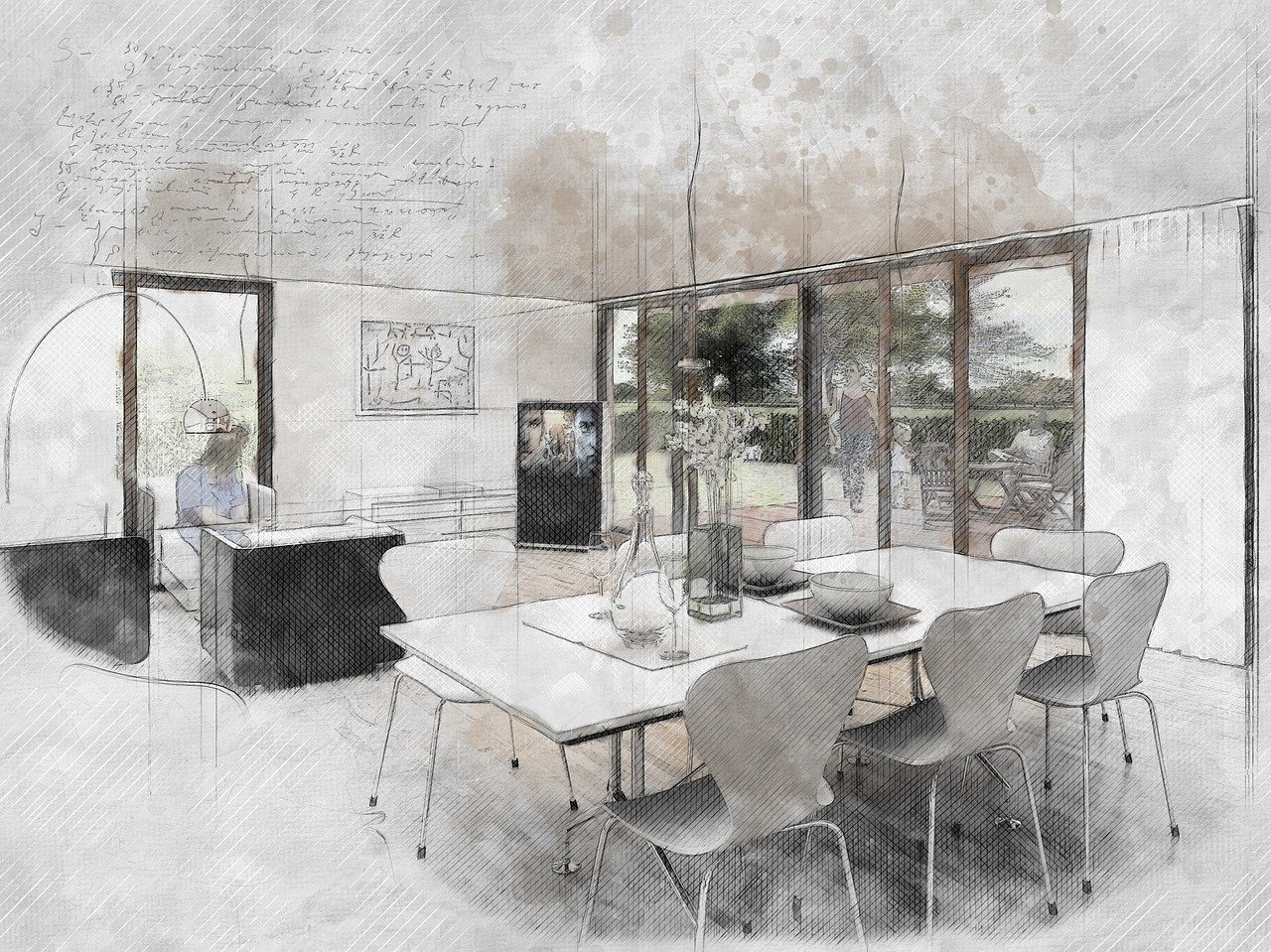
The process of designing or remodeling a home has historically been a perilous journey of guesswork, relying on flat 2D blueprints, tiny material samples, and the client’s often-strained imagination.
This traditional approach meant that clients and designers frequently discovered flaws, functional issues, or aesthetic missteps only after construction had begun, leading to costly change orders, schedule delays, and profound disappointment.
Today, that risk-laden model is being dismantled by the power of the home 3D model and immersive visualization software. These tools transform the design phase from an abstract exercise into a tactile, interactive, and entirely predictable experience.
The modern mantra is to design smarter by creating a perfect digital replica of a future space, allowing homeowners and designers to experiment freely, iterate endlessly, and eliminate risk before a single foundation is poured.
The digital design environment is the ultimate risk mitigation strategy, allowing users to achieve aesthetic perfection and functional certainty with unprecedented efficiency.
Bridging the Communication Gap With Immersive Visualization
The most immediate and profound benefit of 3D modeling is its ability to democratize design understanding. The technical language of architecture, using lines, symbols, and dimensions, is often lost on the layperson. Home 3D models provide a common, crystal-clear visual language that all project stakeholders can understand.
Eliminating the “Imagination Gap”
With 3D modeling, clients no longer have to strain to visualize their future space. They can take virtual walkthroughs using interactive software or Virtual Reality (VR) tours, where clients can digitally step into and navigate their home, gaining a true sense of scale, proportion, and flow from the front door to the master bath.
A home 3D model includes lighting simulations. Designers can demonstrate how natural light filters through windows at different times of day, or how ambient evening light will create mood and warmth in the main living space. This level of realism helps clients connect emotionally with the design.
Structural elements that are nearly impossible to convey in 2D, such as vaulted ceilings, custom staircases, or multi-level spatial transitions, are rendered perfectly in 3D, allowing clients to confirm the design intent and structural impact with confidence.
By turning abstract concepts into a photorealistic, tangible experience, 3D models ensure that the client’s vision and the designer’s plan are perfectly aligned from day one.
The Sandbox of Endless Experimentation
The home 3D model functions as a flexible, consequence-free digital sandbox where creative ideas can be tested, compared, and refined instantaneously. This ability to iterate freely is where 3D modeling truly shines, facilitating smarter design decisions.
Structural and Layout Flexibility
Before committing to a potentially costly layout change, a home 3D model allows you to reconfigure walls instantly and experiment with open-concept designs by virtually removing a wall, or test privacy by adding a partition. The impact on spatial flow, light, and furniture arrangement is visible immediately.
Want to install a bespoke kitchen island or a built-in media center? Model it precisely in 3D to ensure it fits, functions, and looks exactly as intended without risking expensive custom millwork errors.
Test various furniture arrangements and sizes using home 3D models of real-world pieces. This ensures that sofas, dining tables, and beds not only fit but leave adequate clearance for comfortable movement, achieving optimal functional flow.
Unlimited Aesthetic Customization
The design flexibility extends fully into interior finishes and decor. Designers can change paint colors, flooring materials, cabinet finishes, and hardware with a single click. Instead of imagining how a dark wood floor will look with a navy accent wall, the client sees a photorealistic render that eliminates indecision.
The model allows for the seamless application of textures like the sheen of a quartz countertop, the matte finish of tile, or the grain of hardwood, to ensure that all materials work together harmoniously, achieving the desired aesthetic cohesion.
Test out different styles of lighting fixtures, sinks, and appliances to confirm they are to scale and are correctly positioned relative to architectural features and light sources. This level of detailed, instant customization ensures that homeowners can explore every nuance of their personal style, resulting in a truly bespoke home.
The Financial and Operational Advantages
Designing smarter with a home 3D model has a direct, positive impact on a project’s budget and timeline by minimizing uncertainty at every phase.
Accurate Cost Control and Budget Management
The precision of 3D modeling is essential for financial predictability, too. The number one cause of budget overruns in construction is the change order, which is a modification requested mid-build. By finalizing the design in a visually confirmed 3D model, the need for these expensive, late-stage changes is drastically reduced.
Detailed 3D models allow the software to generate accurate Bills of Materials (BOMs). This means the correct amount of flooring, tile, and paint is ordered, minimizing costly material waste and unnecessary inventory.
By viewing premium finishes, like marble or high-end cabinetry, in the 3D context, clients can confidently decide where to allocate their budget for maximum visual impact, instead of making expensive choices based on small, often misleading samples.
Streamlined Construction and Collaboration
3D models accelerate the construction timeline by providing contractors with clear, detailed information. The model provides every trade with a comprehensive visual guide. They can see the exact location of outlets, plumbing fixtures, and structural connections, reducing on-site confusion and misinterpretation that often cause delays.
Engineers and architects can use the home 3D model to spot potential construction conflicts, like mechanical systems overlapping with structural beams, long before they become expensive problems on the job site.
The high level of detail and confidence provided by the 3D model often speeds up the time it takes for clients to approve final plans and for permitting offices to process the design.
Confidence in Every Decision
The future of home design is entirely digital. 3D home models eliminate uncertainty, transforming complex plans into photorealistic, interactive experiences. This technology empowers you to experiment with layouts, finishes, and flow in a consequence-free environment, ensuring that your final design is perfect before construction begins.
Immersive Homes leverages this cutting-edge visualization to put you in complete control, guaranteeing a personalized, high-quality, and budget-savvy build. Stop guessing and start seeing your dream home with Immersive Homes.